Courage to deliver: moving from ambition to improved services for New Zealanders
Sir Brian Roche’s keynote at GOVIS (Government Information System Manager’s Forum) . Sir Brian is the Public Service Commissioner and Head of Service. He also leads the Government Digital Delivery Agency and holds the system lead role of Government Chief Digital Officer (GCDO).
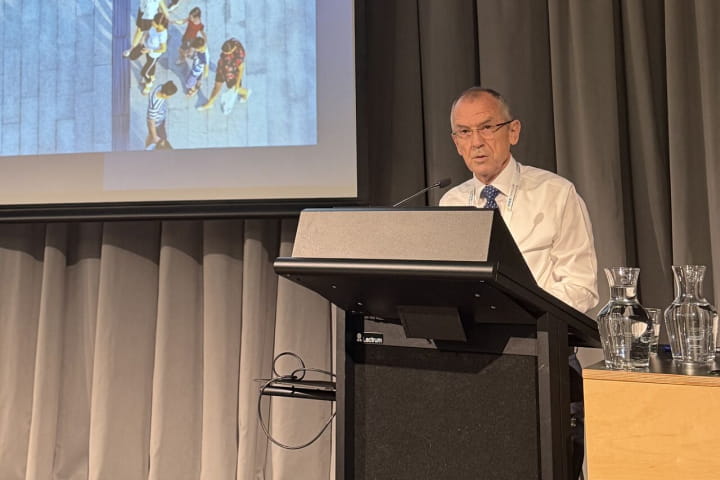
Opening
Good morning.
Can I begin by acknowledging Taranaki Whānui, and thanking Kurt Komene and Ali Houpapa for the mihi whakatau this morning.
Thank you also to GOVIS, and to Mick Crouch and the organising team, for bringing everyone together for this conference.
It is good to be here with a room full of people who understand something important: digital government is not really about technology.
It is about people.
It’s about a parent trying to register a birth and sort out the support they need.
It’s about a young person leaving school and trying to move into work or study.
It’s about the small business owner who wants to do the right thing, hire people, meet their obligations, and get on with running their business.
It’s about an older person who does not want to tell the same story over and over again to different parts of government.
And it is about the public servants who are trying to make those experiences better, often while working with old systems, tight funding, high expectations and real delivery pressure.
That is why the theme of this conference matters.
What courage to deliver means
Courage to deliver is not about being brave and taking risks for the sake of it. It’s also not about chasing the latest technology. And it’s certainly not pretending delivery is easy.
Courage to deliver means being honest about where we are. It means being clear about what needs to change. It means making choices. It means stopping some things as well as starting others. And it means doing the hard, practical work that turns good intentions into services that actually work better for New Zealanders.
My job as the Public Service Commissioner is clear. It is to transform the public service. That means moving it from concept to delivery.
We have talked about digital transformation for a long time. The public has heard the language. They know technology is changing. They know AI is – and will be more and more – a part of their work and life.
But what people want to know is much more practical.
What will be different? What will feel easier? What will take less time? What will save them having to repeat themselves? And how will we actually deliver it this time?
That last question is the one I want to focus on today.
Because in my view, the next phase of digital public service is not about ambition. We have plenty of ambition. It is about execution. It is about discipline. And it is about courage.
Designing government around people
New Zealanders experience government as one. But too often, government still operates as many.
Most people do not wake up thinking: today I would like to deal with 5 agencies. They need to confirm who they are. Get the right help. Pay what they owe. Apply for something. Update something. Move on with their day.
But too often we make people learn our organisational chart. We ask for the same details again and again. We make them jump between websites, phone numbers, offices and forms. We make them tell their story multiple times.
Inside government, a lot of this complexity has built up over time. Systems, processes and structures were created for good reasons. They made sense at the time. But they do not always match how people live now.
So when I talk about a more joined-up public service, I do not mean it as a slogan. I mean something very practical.
We have to stop making organisational boundaries the customer experience.
That takes courage.
Because every boundary exists for a reason. Every agency has a mandate. Every system has an owner. Every process has history behind it. Every funding line has conditions attached to it.
So the easy thing is to work around the edges. The harder thing is to simplify.
The harder thing is to ask: if we were designing this around people, would we design it this way? If the answer is no, then we have work to do.
Let me give you a practical example.
Think about a young person turning 18.
It’s a major point in anyone’s life. They may be finishing school, starting work, applying for study, looking for support, dealing with tax details, opening accounts, or figuring out where they will live.
Today, that experience can feel scattered: different services, forms, instructions, eligibility tests, and places to go when something goes wrong.
A better experience would give clear guidance, reuse verified information where it is safe to do so, show the next steps, and let someone move between digital, phone and face-to-face support without starting again.
Or think about a small business owner. A small business owner wants to hire staff, stay compliant, and grow.
A better system would make compliance and regulation obligations clearer, make their status visible, reduce repeated data entry, and let people get back to the thing they are actually trying to do.
These are not abstract digital ideas. They are the daily experience of government.
And if we are serious about improving them, we need to be honest about the delivery challenge.
The discipline to deliver
Delivery is not one heroic project. It is not a single platform. It is not a press release. It is a set of choices made consistently over time.
And, sometimes, it is the choice to say no.
No to the extra feature that makes the system more complicated. No to the process step that protects an internal preference but adds little public value. No to the project that looks good on paper but does not have the discipline to deliver. No to technology-led enthusiasm when the problem has not been clearly understood.
That is not being a naysayer. It is leadership. Having the courage to say no can make it easier to focus on what we really need to deliver.
The public service is in a period where we need to be very careful with public money – are we ever not in that phase? That does not mean lowering our expectations. It means lifting our discipline.
We have to be clearer about what we will deliver, who it is for, what problem it solves, what evidence we have, what risks we are carrying, and at what point will we stop if it is not working.
That is a different kind of courage. There are no big announcements in it – but these decisions are crucial if we are to deliver.
Trust and inclusion
There’s another important factor we can’t lose sight of if we are to deliver – and that is trust.
We are asking people to trust us with information about their lives, their families, their businesses and their circumstances.
That trust cannot be assumed. It has to be earned.
If we get that wrong, people will not experience digital government as progress. They will experience it as distance.
So courage to deliver also means courage to include.
It means remembering that digital-first must never become digital-only by accident. It means designing for accessibility from the beginning. It means keeping real support available for people who need it. It means testing services with the people who will use them, not just with the people who built them.
And that means being prepared to hear things that are uncomfortable.
Working across the system
A lot of you in this room know this already. You are the people who see the gap between strategy and reality every day. You know where the data does not join up. You know where the policy intent hits an old system. You know where the promise to the public meets the constraints of procurement, privacy, security, funding and workforce capability.
You also know that most of the barriers are not technical on their own.
It’s about leadership, priorities, funding, risk appetite, accountability, skills and the willingness to work across boundaries when the system continues to reward people for staying within them.
It’s also about the courage to trust your colleagues. One person cannot do everything. We have to trust one another to do their job.
That is why I think courage to deliver is such a useful test for us.
It asks whether we are prepared to do the work that is less visible but more important.
The work of building common foundations. The work of agreeing standards. The work of improving identity, information sharing and service design. The work of making the system easier to navigate. The work of stopping duplication. The work of making sure individual agencies can succeed as part of a wider system, rather than in spite of it.
None of this removes agency accountability. Agencies still have statutory responsibilities. They still need to deliver their services well. But the public service also has a collective responsibility to make government work better as a whole.
That is the space we now need to strengthen.
When I say we need more central oversight, I’m not talking about the command-and-control models of the past. Central oversight is not about taking decisions away from agencies. A stronger centre is about setting clear expectations, creating visibility of performance, building common foundations – and ensuring the system delivers on what it has committed to.
And it should help us answer a simple question: are we making it easier for people to deal with government? If we cannot answer that question clearly, we need better information. And if the answer is no, we need the courage to change course.
The delivery test
There is a phrase I have heard in different forms across the public service: we need to move at the speed of trust. I like that. But I would add something to it.
We also need to move at the speed of delivery. Not recklessly. Not by cutting corners. Not by treating privacy, security, accessibility or assurance as obstacles.
We do it by being clearer about what matters, by removing avoidable complexity, and by giving teams the mandate to solve the right problems.
Because the technology will keep moving. AI will keep improving. Expectations will keep rising. The public will not wait patiently while government debates its internal operating model.
They will judge us by whether things work. They will judge us by whether they can find the right service. Whether the information is clear. Whether the process is fair. Whether they can get help when something goes wrong. Whether government remembers what it already knows, and protects it properly. And whether the time they spend dealing with us feels respected.
That should be our delivery test.
Because if we get those things right, life should be tangibly easier for the people and businesses we serve.
What this means for public servants
So what does that mean for us as public servants? It means being clear about the outcome before we choose the tool. It means designing across the whole journey, not just our part of it. It means treating data as a system asset, with strong safeguards. It means building delivery muscle in procurement, assurance, benefits tracking and learning as we go. And it means being honest about the trade-offs, constraints and choices needed to get the job done.
That honesty is not a weakness. It’s how you turn good intentions into results.
The public service has no shortage of talented people. It has no shortage of commitment. And it has no shortage of good ideas.
The challenge now is to turn those ideas into fewer, clearer, better experiences for New Zealanders.
That will take leadership from the centre, leadership from agencies, and leadership from the people in this room.
It will take people who can translate between policy, technology, operations and the public. People who can sit with complexity but still push for simplicity. People who can protect what matters while challenging what no longer serves the public well.
It will take people prepared to say: this is not just an IT project — this is a public service commitment.
And it will take the courage to deliver.
Not courage as a slogan. Courage as a habit.
The courage to simplify. The courage to prioritise. The courage to share. The courage to include. The courage to stop. The courage to be transparent. The courage to measure the real experience of people using our services. The courage to keep going when the work is difficult, unglamorous and necessary.
If we can bring that courage to the next phase, I believe we can make a real difference.
We can make government easier to deal with. We can make public services more connected and more responsive. We can make better use of technology without losing sight of people. And we can show New Zealanders that digital transformation is not just something government talks about. It is something they can feel in the way services work.
That is the opportunity in front of us.
And that is the delivery challenge I hope we take up together.
Thank you.
Utility links and page information
Last updated